Quick Verdict
The 2026 Honda Dio 110 is an ideal scooter for college students, first-time riders and urban commuters looking for sporty styling with dependable Honda reliability. Powered by a refined 109.51cc OBD2B-compliant engine producing 7.95 PS and 9.03 Nm, it delivers smooth city performance while returning a real-world fuel efficiency of around 52–58 kmpl. Its biggest strength is its light handling and low kerb weight, while its biggest weakness is the absence of a front disc brake. Best for daily city commuting and young buyers; not ideal for riders who frequently travel on highways or carry heavy loads.
Key Highlights
✅ Engine: 109.51cc single-cylinder PGM-Fi engine producing 7.95 PS at 8,000 rpm and 9.03 Nm at 5,500 rpm
✅ Mileage: ARAI-certified fuel economy of around 55–60 kmpl, with real-world figures between 52 and 58 kmpl
✅ Weight: Just 103 kg, making it one of the lightest scooters in the 110cc segment
✅ Fuel Tank: 5.3-litre tank offering a practical riding range of nearly 300 km
✅ Features: Fully digital LCD instrument cluster with Bluetooth connectivity on Deluxe variant
✅ Safety: Side-stand engine inhibitor, CBS (Combined Braking System) and Engine Start/Stop Switch
✅ Storage: 18-litre under-seat storage along with a front utility pocket and bag hook
✅ Price: Delhi ex-showroom prices start at approximately ₹74,930 and go up to ₹86,312, depending on the variant
Honda Dio 110 Specifications
Engine & Performance
| Specification |
Details |
| Engine Type |
Air-cooled, 4-stroke, SI, single-cylinder, PGM-Fi |
| Displacement |
109.51 cc |
| Max Power |
7.95 PS (7.84 bhp) @ 8,000 rpm |
| Max Torque |
9.03 Nm @ 5,500 rpm |
| Transmission |
CVT Automatic |
| Starting System |
Self & Kick Start (variant dependent) |
| Top Speed |
Around 82–85 kmph |
| 0–60 kmph |
Approximately 9.5–10.5 seconds |
Fuel & Range
| Specification |
Details |
| Fuel Tank Capacity |
5.3 litres |
| ARAI Mileage |
Around 55–60 kmpl |
| Real-world Mileage |
52–58 kmpl |
| Practical Range |
275–305 km |
Chassis & Dimensions
| Specification |
Details |
| Frame |
Underbone |
| Kerb Weight |
103 kg |
| Seat Height |
765 mm |
| Ground Clearance |
160 mm |
| Wheelbase |
1,260 mm |
| Length |
1,808 mm |
| Width |
723 mm |
| Height |
1,150 mm |
Brakes & Wheels
| Specification |
Details |
| Front Brake |
130 mm Drum |
| Rear Brake |
130 mm Drum |
| CBS/ABS |
CBS Standard |
| Front Tyre |
90/90-12 Tubeless |
| Rear Tyre |
90/100-10 Tubeless |
| Wheels |
Alloy Wheels |
Features & Electronics
| Feature |
Availability |
| Instrument Cluster |
Fully Digital LCD |
| Bluetooth Connectivity |
Yes (Deluxe Variant) |
| Honda RoadSync App |
Yes |
| Navigation Alerts |
Yes |
| USB Charging Port |
Yes (Type-C) |
| LED Headlamp |
Yes |
| LED Position Lamp |
Yes |
| Side Stand Engine Cut-off |
Yes |
| Engine Start/Stop Switch |
Yes |
| Smart Key |
No |
| Mobile App Integration |
Yes (RoadSync-enabled variant) |
Variants & Delhi Ex-showroom Price
| Variant |
Approx. Price |
Key Highlights |
| Honda Dio STD |
₹74,930 |
Digital display, LED headlamp, CBS, side-stand engine cut-off |
| Honda Dio DLX |
₹86,312 |
Bluetooth RoadSync, USB Type-C charger, premium graphics, connectivity features |
Design and Build Quality
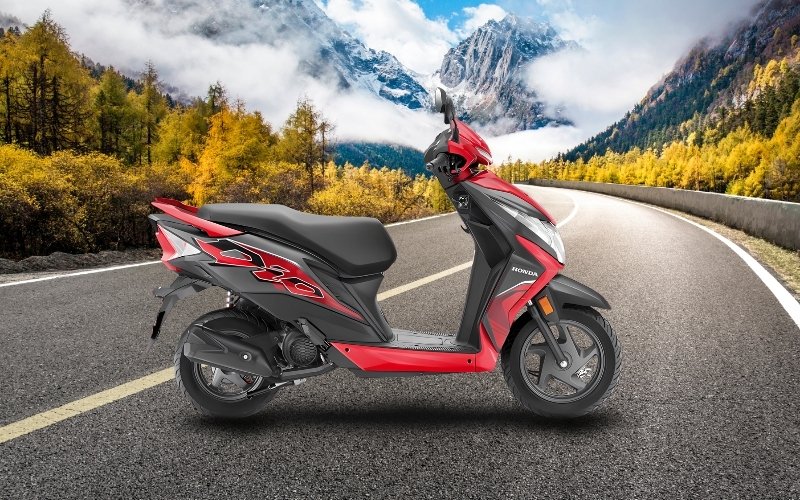
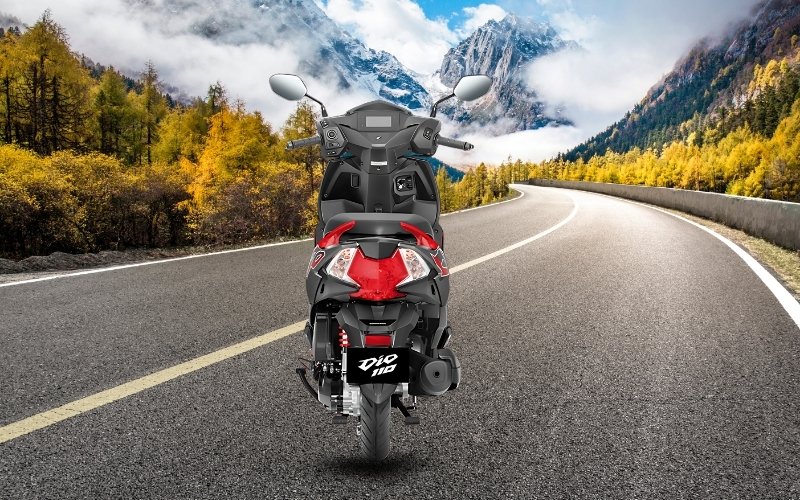
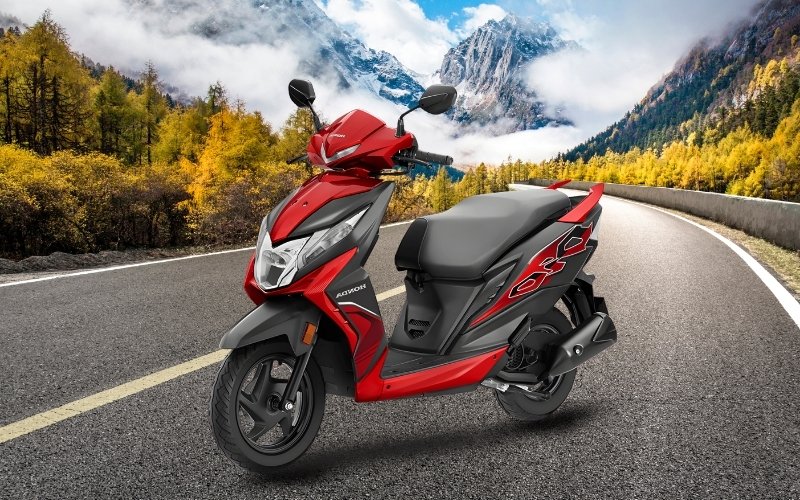
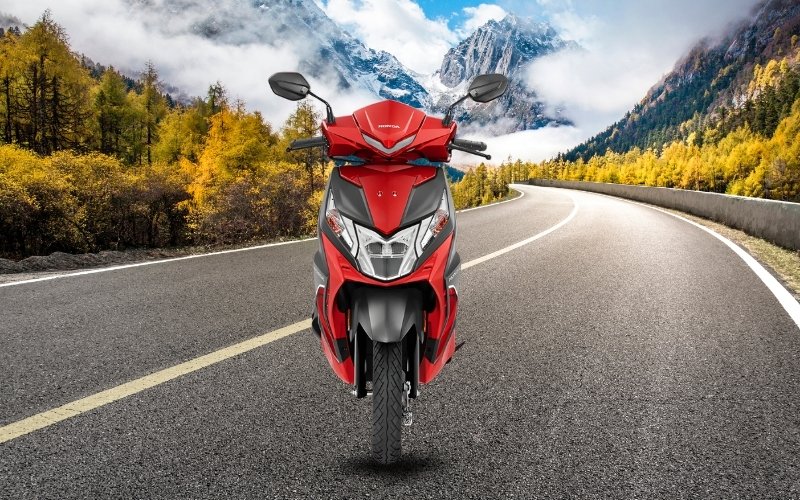
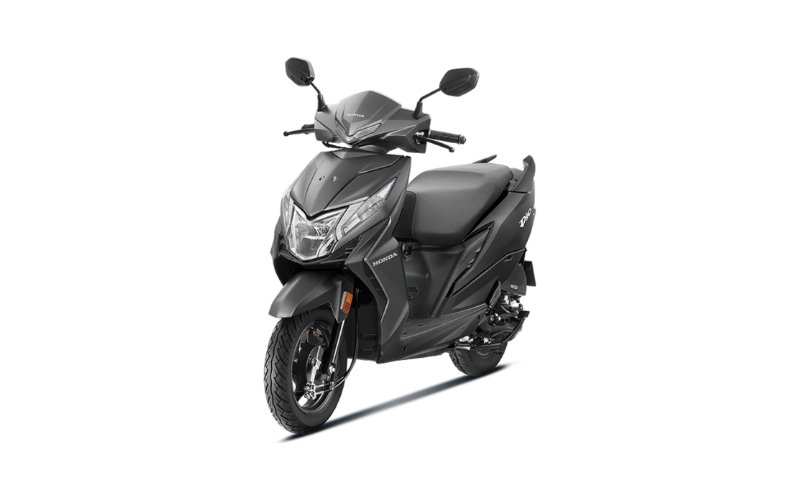
The Honda Dio 110 continues to target young buyers with a design that stands apart from conventional family scooters. Sharp body panels, aggressive front styling, split-style grab rails and bold graphics give it a sporty identity without compromising everyday usability. Honda has also refreshed the colour palette with vibrant dual-tone options, helping the Dio maintain its youthful appeal in a competitive 110cc scooter segment.
Panel fit and finish remain among the scooter's strongest qualities. Body panels feel well assembled with tight panel gaps, while switchgear offers the tactile quality expected from Honda. The LED headlamp and integrated DRLs lend a premium appearance, especially on higher variants. The digital instrument console is easy to read in daylight, although glare can be noticeable under harsh afternoon sunlight.
Practicality has not been ignored. The wide footboard comfortably accommodates backpacks or grocery bags, while the external utility hook proves useful for everyday shopping. The split grab rail is sturdy enough for pillion support and luggage mounting. At 103 kg kerb weight, the Dio feels light to manoeuvre into parking spaces, making it particularly suitable for students and office commuters.
Compared with rivals like the TVS Jupiter and Hero Xoom, the Dio prioritises sporty styling over outright practicality. Buyers looking for youthful design and dependable build quality will appreciate its modern appearance and Honda's reputation for long-term durability.
Engine and Performance
Powering the Honda Dio 110 is a 109.51cc air-cooled, single-cylinder, fuel-injected engine that develops 7.95 PS at 8,000 rpm and 9.03 Nm of torque at 5,500 rpm. While these numbers are modest, they translate into smooth and predictable performance that suits urban commuting exceptionally well. Throttle response is crisp at low speeds, thanks to Honda's programmed fuel injection and OBD2B-compliant tuning.
Acceleration from standstill feels brisk enough for city traffic. The scooter reaches 40 kmph quickly, making traffic light sprints effortless, while 0–60 kmph takes roughly 10 seconds in real-world riding conditions. Mid-range performance is adequate for overtaking slower vehicles, although planning is required when overtaking faster-moving traffic on highways.
Engine refinement is one of the Dio's biggest strengths. Vibrations remain minimal through the handlebars and floorboard, even when cruising between 45 and 60 kmph. Beyond 70 kmph, the engine starts sounding busier, and acceleration becomes gradual rather than enthusiastic. The claimed top speed of around 82–85 kmph is sufficient for occasional ring-road use but not ideal for sustained highway riding.
Heat management is excellent even during prolonged stop-and-go traffic, aided by Honda's efficient air-cooled engine and enhanced Smart Power (eSP) technology. Combined with the silent ACG starter and smooth CVT transmission, the Dio delivers a refined riding experience that beginners and experienced commuters alike will appreciate.
Ride Quality and Handling
One of the Honda Dio 110's strongest attributes is its agile handling. The scooter rides on 12-inch front and 10-inch rear alloy wheels, paired with a telescopic front fork and a preload-adjustable rear monoshock. This suspension setup provides a balanced compromise between comfort and sporty handling, particularly in urban conditions.
At just 103 kg, the Dio feels exceptionally light while filtering through congested city traffic. U-turns require little effort, and the scooter changes direction quickly, making it ideal for college campuses, market streets and crowded office areas. The 765 mm seat height also allows shorter riders to plant both feet comfortably at traffic signals.
Ride quality over speed breakers and potholes is generally good. Smaller road imperfections are absorbed confidently, although sharper potholes can be felt due to the scooter's sporty suspension tuning. Stability remains reassuring up to 60–70 kmph, but crosswinds become noticeable at higher speeds because of the lightweight chassis.
Long commutes of 25–30 km are comfortable thanks to the upright riding position and relaxed handlebar reach. However, riders who frequently travel on rough rural roads may find scooters like the TVS Jupiter slightly more comfortable due to their softer suspension calibration.
Overall, the Honda Dio offers confident handling, predictable braking with CBS and a nimble riding character that perfectly matches its sporty personality, making it one of the easiest scooters to ride daily in busy Indian cities.
Fuel Efficiency — Real World
The Honda Dio 110 is one of the more fuel-efficient sporty scooters in the 110cc segment. Honda claims an ARAI-certified fuel economy of around 55–60 kmpl, while our real-world observations suggest owners can realistically expect 52–58 kmpl depending on riding style, traffic conditions and maintenance.
City Riding
In dense urban traffic with frequent braking and acceleration, the Dio consistently returns 52–55 kmpl. The refined 109.51cc PGM-Fi engine, Honda's enhanced Smart Power (eSP) technology and automatic CVT transmission help keep fuel consumption under control even during stop-and-go commuting.
Highway Riding
On open roads while maintaining speeds between 45 and 60 kmph, mileage improves to around 57–60 kmpl. However, sustained riding above 70 kmph reduces efficiency because the small-capacity engine has to work harder.
Combined Efficiency
For a mix of city and highway usage, buyers can expect an average of 54–56 kmpl. With its 5.3-litre fuel tank, the Dio offers a practical riding range of approximately 285–300 km before requiring a refill.
Compared to rivals, the Dio performs competitively. The Honda Activa 6G offers similar efficiency, while the TVS Jupiter 110 can return slightly better mileage in some conditions due to its commuter-focused tuning. The Hero Xoom 110, meanwhile, delivers similar real-world figures but emphasises performance more than outright economy.
Overall, the Dio strikes an excellent balance between sporty performance and low running costs, making it a sensible everyday scooter for students and office commuters.
Features and Technology
The 2026 Honda Dio 110 receives a meaningful feature update that makes it more competitive in the premium 110cc scooter category. Rather than adding gimmicks, Honda has focused on technology that genuinely improves daily usability.
The highlight is the fully digital LCD instrument cluster, which displays speed, fuel level, trip meter, odometer, clock and eco indicator. On the Deluxe variant, Bluetooth connectivity through Honda RoadSync enables turn-by-turn navigation, incoming call alerts and SMS notifications when paired with a compatible smartphone.
A USB Type-C charging port allows riders to keep their phone charged while commuting. The LED headlamp provides better illumination than conventional halogen units and improves visibility during night rides. Honda also includes a silent ACG starter, eliminating the traditional starter motor noise and making engine starts noticeably smoother.
Safety features include a side-stand engine inhibitor, which prevents the scooter from moving with the stand deployed, reducing the risk of accidental falls. The Combined Braking System (CBS) distributes braking force between both wheels, improving stability during emergency braking.
However, there are a few omissions. The Dio still lacks a front disc brake, keyless ignition, smart key, traction control and ABS, features that are slowly appearing in higher-priced competitors. Buyers prioritising premium equipment may find scooters like the Hero Xoom or Yamaha RayZR slightly more feature-rich.
Even so, the Dio offers a well-rounded technology package with features that are genuinely useful for everyday commuting rather than simply adding marketing appeal.
Comfort and Ergonomics
The Honda Dio 110 has been designed primarily for urban commuting, and its ergonomics reflect that focus. The riding triangle is natural and relaxed, allowing riders of different heights to feel comfortable from the moment they get on the scooter.
The 765 mm seat height is among the lowest in the segment, making it easy for shorter riders and beginners to place both feet firmly on the ground. Combined with the scooter's 103 kg kerb weight, low-speed manoeuvres and parking become almost effortless.
Seat cushioning is supportive for daily rides of 20–30 km, although riders covering longer distances may wish for slightly denser foam. The pillion seat is adequately wide, while the sturdy split grab rails provide passengers with a secure handhold.
Handlebar reach is comfortable and does not require riders to stretch forward, reducing fatigue during heavy traffic. The spacious footboard allows multiple foot positions, which is especially useful during longer commutes. There is also enough room to carry a backpack or small shopping bags between the rider's legs.
The suspension absorbs most urban road imperfections well, ensuring that vibrations are kept to a minimum. Engine refinement further contributes to rider comfort, with very little vibration transmitted through the handlebars or floorboard even at cruising speeds of 50–60 kmph.
Overall, the Dio delivers a comfortable riding experience for students, office commuters and first-time scooter buyers. Those planning frequent two-up highway journeys, however, may prefer a larger scooter with a wider seat and longer wheelbase.
Boot Space and Practicality
While the Honda Dio is marketed as a sporty scooter, it remains practical enough for everyday use. Honda has balanced stylish design with features that matter during daily commuting.
The scooter offers 18 litres of under-seat storage, which is suitable for carrying a half-face helmet, rain gear, documents and a small backpack. A large full-face helmet may not fit depending on its shell size, so buyers should verify compatibility before purchase.
The wide, flat floorboard is useful for transporting grocery bags, office bags or school backpacks. An external utility hook positioned below the handlebar securely holds shopping bags, reducing the need to place loose items on the footboard.
The front storage pocket provides convenient access to small essentials such as a wallet, mobile phone or water bottle. On higher variants, the nearby USB Type-C charging port lets riders charge smartphones without opening the seat.
With a 5.3-litre fuel tank and real-world mileage of around 54–56 kmpl, fuel stops are relatively infrequent. The scooter's lightweight construction also makes it easy to push, park and manoeuvre in crowded parking areas.
Compared with the TVS Jupiter, which offers larger under-seat storage, the Dio sacrifices a little cargo capacity for its compact, sporty styling. Nevertheless, it remains practical enough for college students, office-goers and everyday urban errands.
Variants — Which One to Buy
Honda currently offers the Dio 110 in two primary variants, allowing buyers to choose between affordability and additional convenience features.
Honda Dio Standard
The Standard variant is aimed at buyers looking for dependable everyday transportation at the lowest possible price. It includes the refined 109.51cc fuel-injected engine, LED headlamp, digital instrument cluster, CBS, side-stand engine inhibitor and alloy wheels. For riders who simply want Honda reliability without additional electronics, this variant delivers excellent value.
Honda Dio Deluxe
The Deluxe variant adds several premium features that justify its higher asking price. Buyers receive Bluetooth connectivity through Honda RoadSync, USB Type-C charging, premium graphics and enhanced smartphone integration. These additions make the scooter feel noticeably more modern without affecting maintenance costs or fuel efficiency.
Which Variant Offers Better Value?
For most buyers, the Honda Dio Deluxe is the recommended choice. Although it costs more than the Standard model, the added convenience of Bluetooth navigation, smartphone alerts and USB charging improves the ownership experience over several years. The price difference becomes easier to justify considering these features are increasingly expected in premium scooters.
Choose the Standard variant if your priority is keeping the purchase price as low as possible.
Choose the Deluxe variant if you want better long-term value, improved connectivity and a more premium ownership experience. For the majority of urban buyers, the Deluxe variant represents the best balance of price, equipment and everyday practicality.
Honda Dio 110 vs Competitors
The Honda Dio 110 competes in one of India's most crowded scooter segments. Its closest rivals are the TVS Jupiter 110, Hero Xoom 110, and Honda Activa 6G. Each scooter targets a different type of buyer, so choosing the right one depends on your priorities.
| Model |
Ex-showroom Price (Approx.) |
Engine |
Real-world Mileage |
Key Advantage |
| Honda Dio 110 |
₹74,930–₹86,312 |
109.51cc |
52–58 kmpl |
Sporty styling, light handling |
| TVS Jupiter 110 |
₹79,000–₹92,000 |
113.3cc |
55–60 kmpl |
Better comfort and practicality |
| Hero Xoom 110 |
₹76,000–₹89,000 |
110.9cc |
50–55 kmpl |
Sportier performance and features |
| Honda Activa 6G |
₹80,000–₹96,000 |
109.51cc |
52–58 kmpl |
Excellent resale value and refinement |
Honda Dio 110 vs TVS Jupiter 110
The TVS Jupiter costs approximately ₹4,000–₹8,000 more depending on the variant. In return, it offers a larger seat, better suspension comfort, more practical storage solutions and slightly higher real-world fuel efficiency. However, the Dio feels noticeably lighter and more agile in city traffic, making it more enjoyable for younger riders.
Choose the Dio if sporty styling and easy manoeuvrability matter most.
Choose the Jupiter if comfort and family practicality are your priorities.
Honda Dio 110 vs Hero Xoom 110
The Hero Xoom appeals to buyers who prefer aggressive styling and additional premium features. It offers better initial acceleration and, on some variants, a front disc brake. However, the Dio counters with superior engine refinement, Honda's extensive service network and consistently lower maintenance costs.
Choose the Dio for long-term ownership and reliability.
Choose the Xoom if sharper performance and extra equipment are more important.
Honda Dio 110 vs Honda Activa 6G
Although both scooters share the same 109.51cc engine, they target different audiences. The Activa focuses on mature family buyers, while the Dio is designed for students and younger commuters.
The Activa offers a more neutral riding position, higher resale value and timeless styling. The Dio, meanwhile, feels more dynamic thanks to its lighter weight, sharper design and youth-oriented ergonomics.
Which Scooter Should You Buy?
- Choose the Honda Dio 110 if you want a sporty commuter with dependable Honda reliability.
- Choose the TVS Jupiter if comfort, storage and family use come first.
- Choose the Hero Xoom if performance and sporty features are your highest priority.
- Choose the Honda Activa 6G if resale value and proven reliability are your main concerns.
Pros and Cons
PROS
- Refined Engine: The 109.51cc PGM-Fi engine delivers smooth acceleration with very low vibration, making daily commuting less tiring.
- Excellent Fuel Efficiency: Real-world mileage of 52–58 kmpl helps keep monthly fuel expenses low.
- Lightweight Chassis: At just 103 kg, the Dio is extremely easy to ride through congested city streets and crowded parking areas.
- Honda Reliability: Honda's widespread service network, affordable spare parts and strong resale value reduce long-term ownership costs.
- Modern Features: The Deluxe variant includes Bluetooth connectivity, Honda RoadSync, USB Type-C charging and a fully digital instrument cluster.
- Sporty Styling: Sharp bodywork, LED lighting and attractive colour options give the Dio a youthful appearance that stands out from family-oriented scooters.
CONS
- No Front Disc Brake: Drum brakes at both ends are adequate for city use but lack the stronger stopping power offered by some rivals.
- Limited Highway Performance: With around 7.95 PS, overtaking at speeds above 70 kmph requires planning.
- Average Under-seat Storage: The 18-litre boot cannot accommodate every full-face helmet, reducing practicality for some buyers.
- No Smart Key or Keyless Ignition: Premium convenience features offered by some competitors are missing.
Verdict — Should You Buy It?
The 2026 Honda Dio 110 remains one of the most sensible sporty scooters in the Indian market. It combines Honda's proven reliability with youthful styling, smooth engine refinement and excellent fuel efficiency. While it is not the most feature-packed scooter in its class, it delivers where most everyday commuters place the highest value—low running costs, dependable performance and easy rideability.
Buy it if you are...
- A college student looking for a stylish and lightweight scooter.
- A first-time buyer who values Honda's reliability and low maintenance.
- A daily commuter riding 20–40 km in city traffic.
- Someone who wants fuel efficiency of around 55 kmpl without compromising refinement.
Skip it if you are...
- Looking for a scooter with a front disc brake or ABS.
- Frequently riding on highways at speeds above 70 kmph.
- Needing maximum boot space for luggage or a large full-face helmet.
- Expecting premium features such as keyless ignition or a smart key.
Wait if you are...
- Expecting Honda to introduce a future update with a front disc brake or additional premium technology.
- Comparing multiple premium 110cc scooters before making a final purchase.
Overall Verdict
The Honda Dio 110 earns a rating of 4.4/5. It may not lead the segment in outright features, but it excels in the areas that matter most to everyday riders: reliability, refinement, fuel economy and easy city handling. If your riding is primarily urban and you appreciate sporty styling backed by Honda's dependable engineering, the Dio remains one of the strongest choices in the 110cc scooter segment.